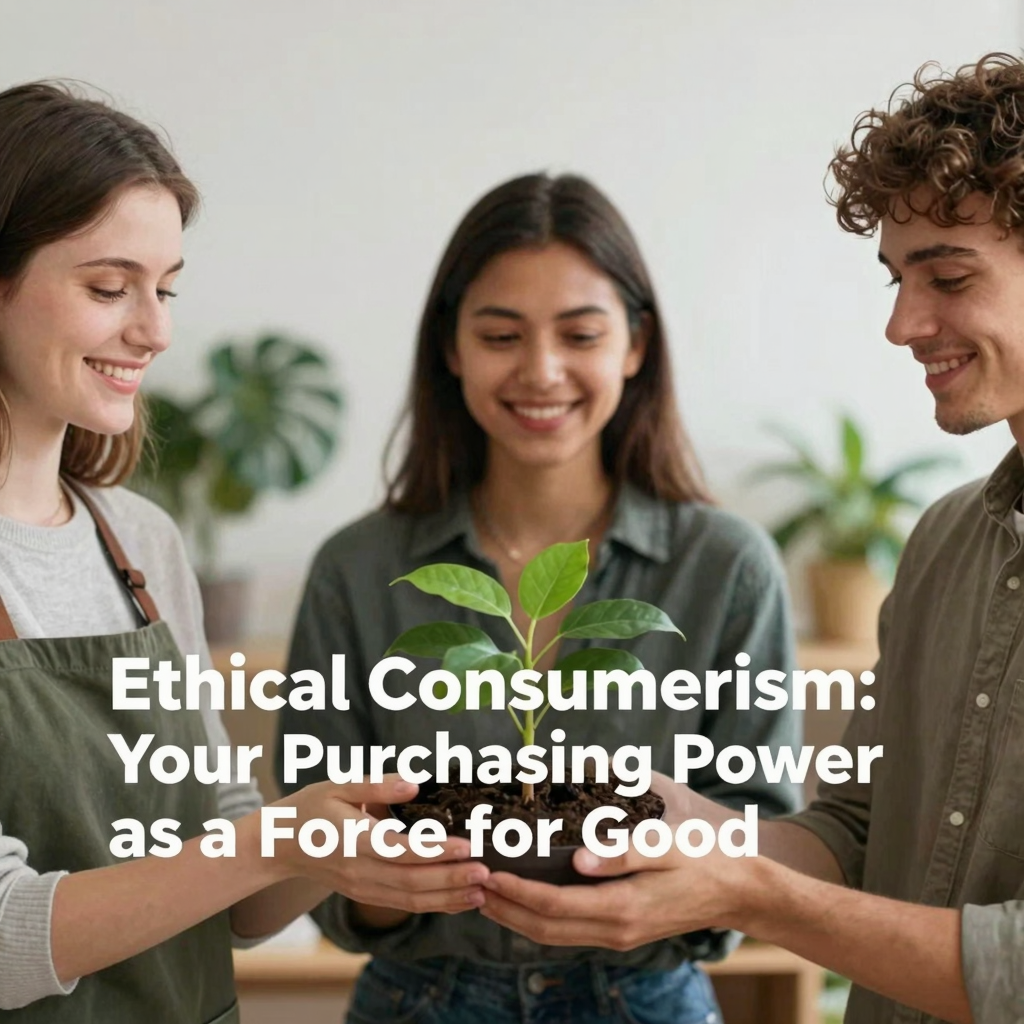
In today’s hyper-connected, globally aware world, the act of buying something rarely feels like just a simple transaction. Increasingly, consumers are asking questions beyond price and convenience. They’re inquiring about origins, labor conditions, environmental footprints, and corporate values. This shift in mindset marks the rise of Ethical Consumerism – a powerful movement where individuals consciously align their spending habits with their personal values and a desire for a more just and sustainable world. It’s about recognizing that every dollar spent is a vote cast for a particular kind of future.
What Exactly is Ethical Consumerism?
Ethical Consumerism goes beyond mere consumerism; it’s a philosophy and a practice. At its core, it involves making purchasing decisions based not only on personal benefit but also on the broader impact of those choices. It’s about considering the ethical implications of a product or service throughout its entire lifecycle – from the sourcing of raw materials and manufacturing processes to distribution, use, and eventual disposal.
This approach often intersects with several key areas:
- Environmental Sustainability: Choosing products with minimal ecological damage, supporting renewable resources, reducing waste (through reusables or minimal packaging), and favoring companies with strong environmental policies.
- Social Justice & Fair Labor: Prioritizing brands that ensure fair wages, safe working conditions, no child or forced labor, and respect for workers’ rights throughout their supply chains. This includes supporting Fair Trade certified goods.
- Animal Welfare: Opting for cruelty-free products, supporting humane farming practices, and avoiding goods tested on animals.
- Community Impact: Supporting local businesses, artisans, and farmers to bolster local economies and reduce transportation emissions.
- Corporate Ethics & Transparency: Favoring companies with transparent practices, ethical governance, positive community engagement, and avoidance of harmful practices like tax evasion or political lobbying against the public interest.
Ethical consumerism isn’t about achieving perfection; it’s about making more informed and conscious choices, striving for progress over time.
Why Ethical Consumerism Matters More Than Ever
The significance of ethical consumerism extends far beyond individual satisfaction. It represents a collective leveraging of economic power to address some of the most pressing challenges of our time.
Driving Positive Change
Consumer demand is a powerful driver for corporate behavior. When a significant number of consumers shift their spending towards ethical brands, traditional companies take notice. This creates a strong market incentive for businesses to:
- Improve labor conditions in factories and farms worldwide.
- Invest in sustainable materials and production methods.
- Reduce pollution and carbon footprints.
- Adopt transparent reporting on their practices.
- Develop genuinely ethical business models.
Essentially, ethical consumerism puts pressure on the market to evolve towards greater responsibility.
Mitigating Environmental Damage
Our current consumption patterns are pushing planetary boundaries. Ethical consumerism directly combats this by:
- Reducing Waste: Choosing durable goods, reusable items, and products with minimal or recyclable packaging directly cuts down on landfill contributions and plastic pollution.
- Conserving Resources: Opting for sustainably sourced materials (like FSC-certified wood, recycled metals, organic cotton) helps preserve biodiversity and finite resources.
- Lowering Carbon Emissions: Supporting local producers, choosing plant-based options (which often have a lower footprint than animal products), and selecting energy-efficient appliances contribute to reducing greenhouse gas emissions.
Promoting Social Equity
Global supply chains often hide significant human suffering. Ethical consumerism seeks to address this by:
- Supporting Fair Wages: Fair Trade certification and similar initiatives ensure producers in developing countries receive a fair price for their goods, enabling better livelihoods.
- Ensuring Safe Conditions: Demanding transparency helps combat sweatshops and hazardous working environments.
- Empowering Communities: Buying directly from cooperatives or community-based enterprises fosters economic self-sufficiency.
Building Personal Alignment and Integrity
On an individual level, ethical consumerism allows people to live more authentically. It reduces the cognitive dissonance that comes from knowing a purchase might contribute to harm. Making choices aligned with one’s values fosters a sense of agency, purpose, and connection to the global community.
Navigating the Challenges and Complexities
While the principles of ethical consumerism are clear, putting them into consistent practice presents real-world difficulties.
The Greenwashing Dilemma
One of the biggest hurdles is greenwashing – when companies spend more time and money marketing themselves as environmentally friendly than actually minimizing their environmental impact. This makes it incredibly challenging for consumers to distinguish genuinely ethical brands from those merely capitalizing on the trend. Vague terms like “eco-friendly,” “natural,” or “green” without specific certifications or transparent reporting should raise red flags.
Information Overload and Accessibility
Finding reliable information about a company’s supply chain, labor practices, and environmental policies can be time-consuming and overwhelming. Certifications (like Fair Trade, B Corp, Organic, Leaping Bunny) help, but the landscape is complex, and not all ethical brands are certified. Furthermore, ethical products are often priced higher due to fair labor costs and sustainable practices, making them inaccessible to lower-income consumers. This raises important questions about privilege and the systemic changes needed to make ethical choices available to all.
The Myth of the “Ethical” Purchase
It’s crucial to acknowledge that no purchase is entirely without impact. Every product requires resources and energy. Ethical consumerism isn’t about finding a perfect, zero-impact solution (which likely doesn’t exist), but rather about making better choices consistently. It’s a journey of continuous improvement.
Systemic Change vs. Individual Action
While consumer choices are powerful, they are not a silver bullet. Relying solely on individual ethical consumption shifts the burden away from corporations and governments who hold significant responsibility. Robust regulations, corporate accountability, and systemic shifts in production and energy systems are equally, if not more, critical. Ethical consumerism should be viewed as one vital tool within a broader toolbox for change, complementing advocacy, policy support, and collective action.
Practical Steps Towards Becoming a More Ethical Consumer
Transitioning to a more ethical consumption pattern is a process. Here are actionable steps to get started and deepen your practice:
1. Educate Yourself and Research
- Leverage Resources: Utilize websites and apps dedicated to ethical ratings (like Ethical Consumer, Good On You, B Corp directory), though always cross-reference.
- Understand Certifications: Learn what common certifications actually mean (e.g., Fair Trade, Organic, Rainforest Alliance, B Corp).
- Follow Ethical Brands & Thought Leaders: Stay informed through blogs, social media accounts, and news sources focused on sustainability and ethics.
2. Prioritize and Start Small
- Focus on High-Impact Areas: Consider starting with categories where your choices have a larger potential impact, such as food (especially meat/dairy), clothing (fast fashion), electronics, banking/investments, or energy providers.
- Make Gradual Swaps: Don’t feel pressured to overhaul everything overnight. Replace items as they wear out or run out with more ethical alternatives. Start with one product category.
3. Embrace the “R” Hierarchy
Often, the most ethical choice isn’t buying something new at all. Adopt the principles of:
- Reduce: Consume less. Do you really need it? Can you borrow, rent, or go without?
- Reuse: Choose reusable items over disposables (bags, bottles, containers). Buy second-hand (clothing, furniture, electronics).
- Recycle: Properly recycle what you can’t avoid, but view this as a last resort after reducing and reusing.
4. Support Ethical Businesses
- Seek Out Certifications: Look for credible certifications as a starting point.
- Buy Local and Independent: Support local farmers’ markets, artisans, and small businesses where transparency is often higher.
- Choose B Corps: B Corporations are legally required to consider the impact of their decisions on their workers, customers, suppliers, community, and the environment.
- Vote with Your Wallet: Consciously shift spending away from companies with poor records towards those demonstrating positive practices.
5. Demand Transparency and Advocate
- Ask Questions: Contact companies directly to inquire about their sourcing and practices. Consumer inquiries signal demand for transparency.
- Use Your Voice: Share information, support campaigns for corporate accountability and stronger regulations.
- Support Systemic Change: Recognize that while your purchases matter, advocating for policy changes (like stricter environmental laws or living wage legislation) is essential.
Beyond the Purchase: The Bigger Picture
Ethical consumerism is a significant step, but it’s part of a larger ecosystem of change. True transformation requires:
- Corporate Responsibility: Companies must proactively integrate ethical and sustainable practices into their core operations, moving beyond compliance to genuine leadership.
- Government Regulation: Strong laws and enforcement are needed to set minimum standards, penalize bad actors, create a level playing field, and incentivize sustainable innovation.
- Investment in Alternatives: Funding and supporting the development of truly sustainable materials, circular economy models, and renewable energy infrastructure.
- Collective Action: Joining forces through community groups, NGOs, and social movements amplifies impact and pushes for broader systemic shifts.
Conclusion: Your Choices Shape the World
Ethical consumerism is more than a trend; it’s a growing recognition of the interconnectedness between our daily choices and the health of our planet and its people. While navigating this path involves challenges – greenwashing, cost barriers, information gaps – the potential for positive impact is immense. By educating ourselves, making conscious choices (starting where we can), reducing consumption, reusing what we have, supporting ethical businesses, and advocating for broader change, we collectively wield our purchasing power as a formidable force for good.
Remember, it’s not about perfection, but progress. Every more ethical choice contributes to shifting market dynamics, raising standards, and building momentum towards a future where commerce serves not just profit, but people and the planet. Your wallet is a powerful tool – use it wisely to help shape the world you want to see.