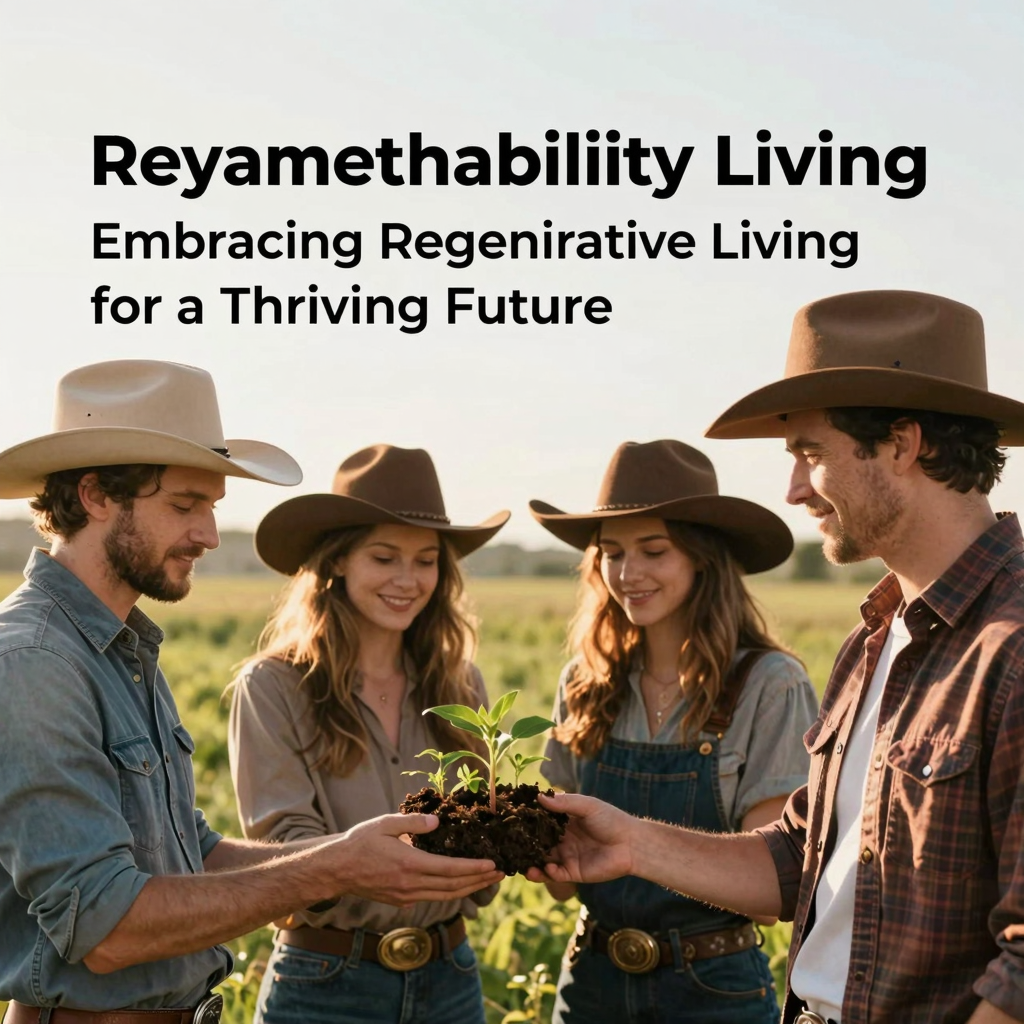
The term “sustainability” has become a ubiquitous part of our lexicon, a beacon guiding us towards a future where human activity doesn’t deplete the planet’s resources. While crucial, sustainability often focuses on minimizing harm – doing less damage, consuming less, polluting less. It’s a vital step, but many forward-thinking individuals and communities are now looking beyond mere maintenance towards a more dynamic, positive approach: Regenerative Living. This philosophy isn’t just about reducing our footprint; it’s about actively healing, restoring, and enhancing the natural and social systems that support all life.
What is Regenerative Living?
At its core, regenerative living is a holistic philosophy and practice that seeks to create systems – ecological, social, and economic – that are not just sustainable but actually improve over time. It moves past the goal of “doing no harm” to actively “doing good.” Imagine a forest: a sustainable approach might involve selective logging to avoid clear-cutting. A regenerative approach would involve planting diverse native species, nurturing the soil microbiome, creating wildlife corridors, and ensuring the forest becomes more biodiverse, resilient, and productive than it was before human intervention.
Regenerative principles draw inspiration from nature itself, where ecosystems constantly cycle nutrients, build soil, purify water, and adapt to change. It applies this wisdom to how we grow food, build homes, manage resources, design economies, and relate to each other and the planet. It recognizes that humans are not separate from nature but deeply intertwined participants in its intricate web.
Key Principles of Regeneration
- Healing and Restoration: Actively repairing damaged ecosystems (soils, watersheds, forests, oceans).
- Building Resilience: Creating systems that can adapt and thrive amidst change and disturbance.
- Cultivating Diversity: Valuing and fostering biological, cultural, social, and economic diversity.
- Cycling Nutrients and Resources: Mimicking nature’s closed-loop systems to eliminate waste and maximize resource use.
- Creating Conditions for Life to Thrive: Focusing on outcomes that enhance the health and vitality of all living beings.
- Thinking in Systems: Understanding the interconnectedness of all elements and designing solutions accordingly.
- Empowering Participation: Engaging communities in co-creating regenerative solutions.
Regenerative Living in Action: Domains of Impact
Moving from theory to practice, regenerative living manifests across various aspects of our lives. It’s not a single action but a lens through which we view and participate in the world.
Regenerative Agriculture and Food Systems
This is perhaps one of the most visible and impactful areas of regeneration. Conventional agriculture often degrades soil, relies heavily on synthetic inputs, pollutes waterways, and contributes significantly to greenhouse gas emissions. Regenerative agriculture flips this script:
- Soil Health as Foundation: Practices like no-till farming, cover cropping, diverse crop rotations, and composting build soil organic matter. Healthy soil sequesters carbon, retains water, increases fertility naturally, and supports a vibrant ecosystem underground.
- Biodiversity Enhancement: Integrating livestock (managed with rotational grazing), planting hedgerows, and cultivating polycultures instead of monocultures create habitats for beneficial insects and wildlife, leading to more resilient farms.
- Water Cycle Restoration: Techniques like keyline design and swales help capture rainwater, recharge aquifers, and reduce erosion and flooding.
- Community Connection: Supporting local regenerative farmers through CSAs (Community Supported Agriculture), farmers’ markets, and local food hubs strengthens regional food security and economies.
The result? Farms that produce nutritious food while drawing down carbon, enhancing biodiversity, and improving watershed health – truly regenerative systems.
Regenerative Design and Building
Our homes and communities can also be designed to give back more than they take. Regenerative design goes beyond energy efficiency (green building) to create structures and landscapes that actively regenerate their surroundings:
- Living Buildings: Structures that generate more energy than they use, capture and treat all their own water, and are built with non-toxic, locally sourced, or recycled materials.
- Biophilic Design: Incorporating natural elements, patterns, and materials to enhance human well-being and connection to nature.
- Regenerative Landscaping: Using native plants, creating wildlife habitats, building healthy soil, managing water on-site through rain gardens and bioswales, and even integrating food production.
- Circular Material Flows: Designing for disassembly and reuse, minimizing construction waste, and utilizing materials that can be composted or recycled at the end of their life.
Imagine neighborhoods that produce food, manage water, support pollinators, and generate clean energy, becoming net-positive contributors to the environment.
Regenerative Economics and Business
The dominant extractive economic model prioritizes profit above all else, often at the expense of people and planet. Regenerative economics seeks to redefine value and purpose:
- Triple Bottom Line (People, Planet, Profit): Expanding beyond just financial profit to measure social and environmental impact.
- Circular Economy: Designing out waste and pollution, keeping products and materials in use, and regenerating natural systems (e.g., cradle-to-cradle design, product-as-a-service models).
- Cooperative and Community-Owned Models: Businesses structured to benefit workers and communities directly, fostering local resilience and equitable wealth distribution.
- True Cost Accounting: Incorporating the environmental and social costs of production into pricing, making regenerative choices more economically competitive.
- Investing in Regeneration: Directing capital towards businesses and projects that demonstrably restore ecosystems and communities.
This shift fosters businesses that are engines of positive change, creating shared prosperity while healing the planet.
Regenerative Community and Social Systems
Regeneration is deeply social. It thrives on connection, collaboration, and mutual support:
- Community Resilience: Building local networks for food, energy, water, skills-sharing, and mutual aid to withstand shocks.
- Social Equity and Justice: Recognizing that environmental regeneration is inseparable from social justice. Addressing systemic inequalities is fundamental to creating truly thriving communities where all members can participate and benefit.
- Cultural Regeneration: Honoring and revitalizing indigenous knowledge, local traditions, and cultural practices that foster connection to place and sustainable living.
- Participatory Governance: Creating inclusive decision-making processes where community members have agency in shaping their future.
- Education for Regeneration: Fostering learning environments that cultivate ecological literacy, systems thinking, empathy, and practical skills for creating positive change.
Strong, just, and connected communities are the bedrock upon which widespread regenerative transformation can occur.
Regenerative Personal Practices
While systemic change is essential, individual actions aligned with regenerative principles create ripples:
- Conscious Consumption: Choosing products and services from regenerative businesses, minimizing waste, repairing instead of replacing, and supporting local economies.
- Nurturing Connection: Spending time in nature, gardening (even on a balcony), composting, observing local ecosystems, and developing a personal relationship with the land.
- Skill Building: Learning practical skills like food preservation, basic mending, natural cleaning methods, or even regenerative gardening techniques.
- Mindfulness and Well-being: Practices that cultivate inner resilience, reduce stress, and foster a sense of interconnectedness – crucial for sustaining long-term engagement.
- Engagement and Advocacy: Participating in community initiatives, supporting regenerative policies, and sharing knowledge with others.
These practices ground the philosophy in daily life, fostering a sense of agency and purpose.
The Challenges and Opportunities
Transitioning to regenerative living is not without hurdles. It requires shifting deeply ingrained habits, challenging powerful vested interests in extractive systems, and navigating complex social and economic transitions. Scaling regenerative agriculture faces barriers in policy, market access, and knowledge dissemination. Shifting investment flows towards regeneration requires new financial models and metrics. Building truly equitable communities demands confronting systemic injustices.
Yet, the opportunities are immense and compelling. Regenerative practices offer tangible solutions to our most pressing crises:
- Climate Change: Regenerative agriculture and ecosystem restoration are powerful tools for sequestering carbon.
- Biodiversity Loss: Creating habitats and fostering diversity reverses the trend of species extinction.
- Soil Degradation: Building healthy soil is fundamental to long-term food security and ecosystem health.
- Water Scarcity: Restoring watersheds and improving soil water retention mitigates drought and flooding.
- Social Fragmentation: Building strong, equitable communities fosters resilience and well-being.
- Economic Inequality: Regenerative business models can create more equitable and localized prosperity.
Regeneration offers not just survival, but the potential for thriving – for humans and the entire biosphere.
Embracing the Regenerative Path
Regenerative living is an invitation to participate actively in healing our world. It moves us from a narrative of scarcity, limitation, and damage control towards one of abundance, renewal, and positive creation. It recognizes that we have the capacity, and indeed the responsibility, to be stewards who leave the land, the water, the air, and our communities better than we found them.
This journey begins with a shift in perspective – seeing ourselves not as separate consumers but as interconnected participants within living systems. It starts with curiosity and learning, perhaps by visiting a regenerative farm, joining a community garden, or researching regenerative businesses. It involves taking small, conscious steps in our daily lives and advocating for broader systemic change. It thrives on collaboration, recognizing that the solutions are co-created within communities.
Regeneration is not a destination but a continuous process of learning, adapting, and co-creating. It’s a path guided by the wisdom of nature and fueled by the collective intention to build a future where all life flourishes. It’s the hopeful, proactive, and deeply necessary evolution beyond sustainability.